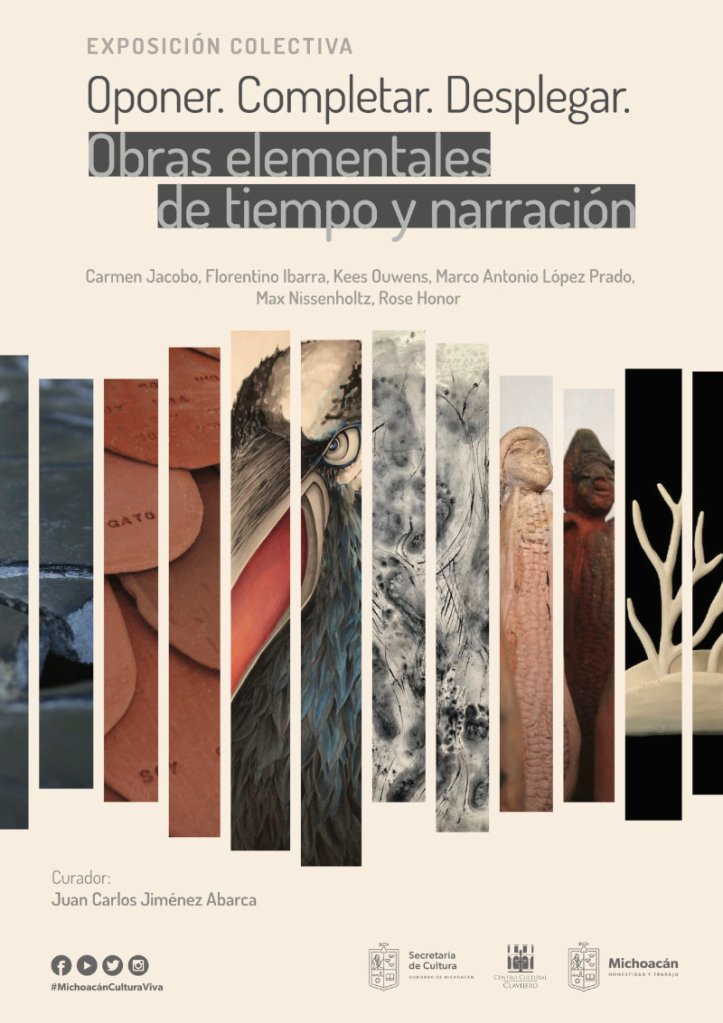
Oponer. Completar. Desplegar. Obras elementales de tiempo y narración.
Juan Carlos Jiménez Abarca. Curador.
In his monumental work Time and Narration (1983–85), the French philosopher Paul Ricoeur set out to explore the horizons of human life as narrative and the implications this has for the writing of history, narrative fiction, and the experience of time. In those same years and with a similar sense of intention, although not at all monumental, Ramón Xirau (a Spanish poet and philosopher who had settled in Mexico since the end of the Spanish Civil War) published a short essay entitled Lived Time. About “Being” (1985). Drawing like Ricoeur on the reflections on consciousness and time contained in the Confessions of Saint Augustine, Xirau writes that it is inaccurate to speak of the past, present, and future as three separate stages of time. By focusing on the experience of life, it is more appropriate to deal with the “present time of things past and future.”
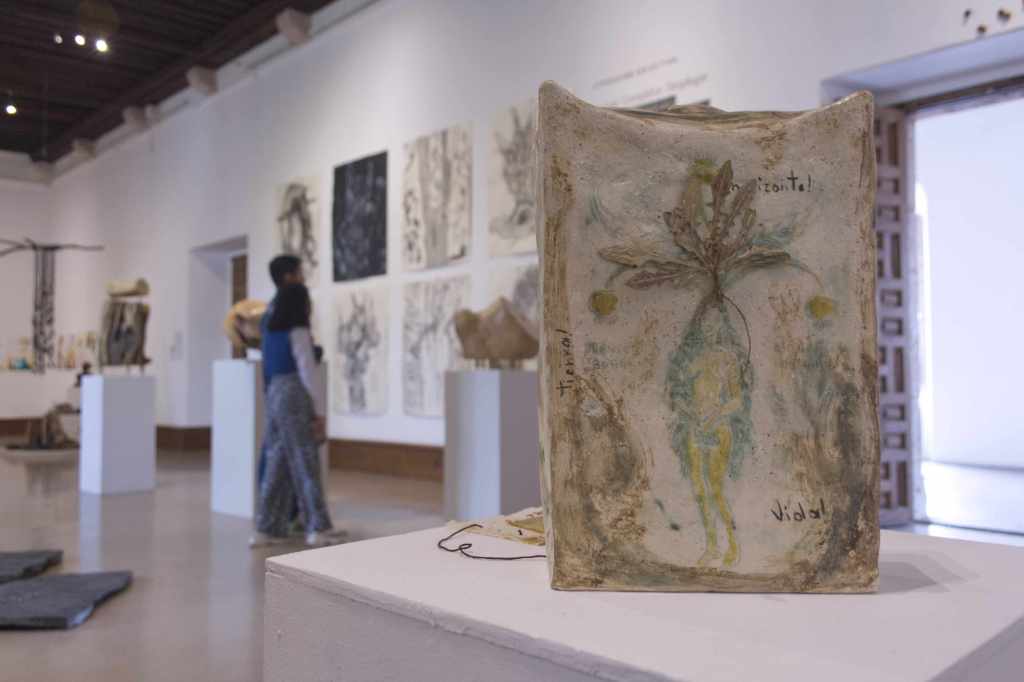
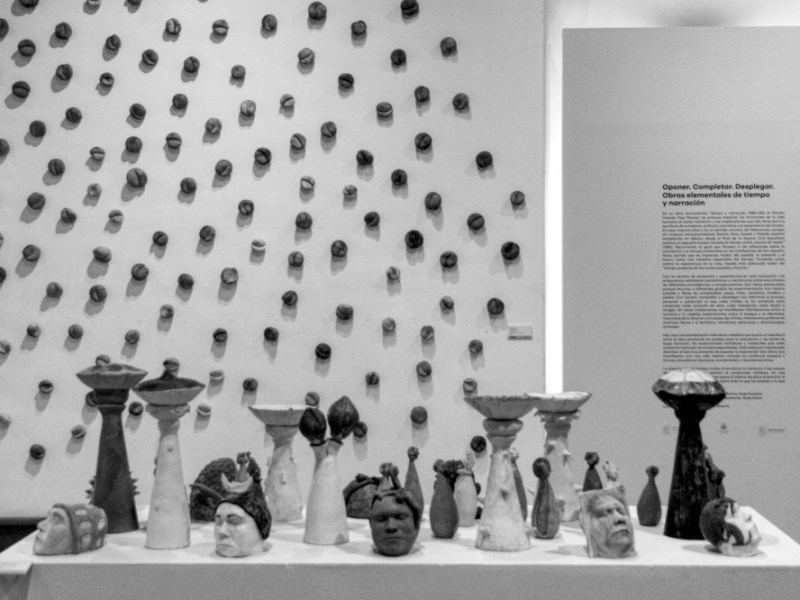
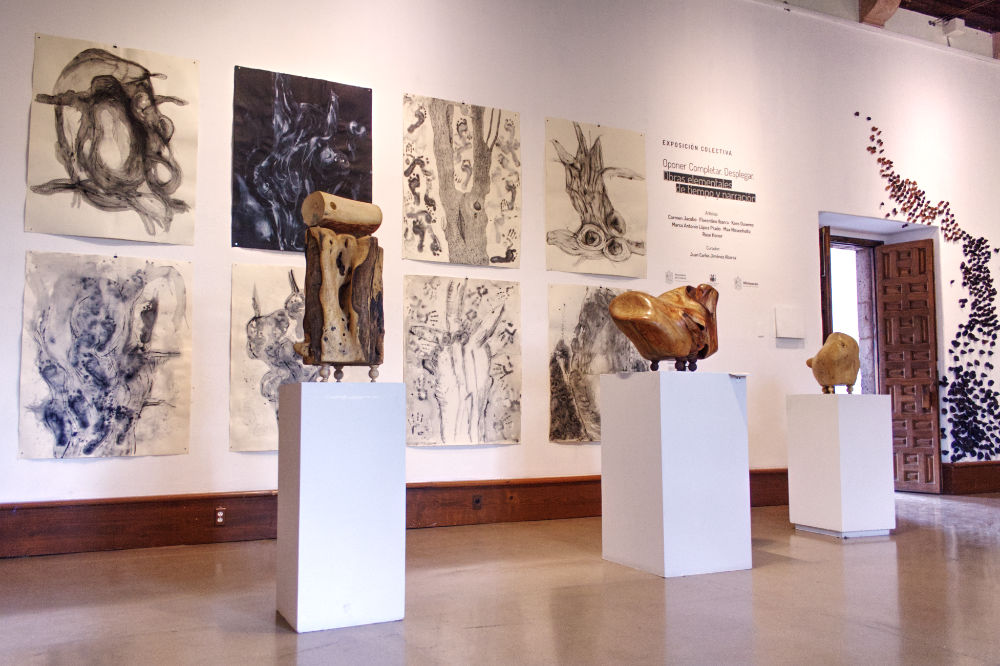
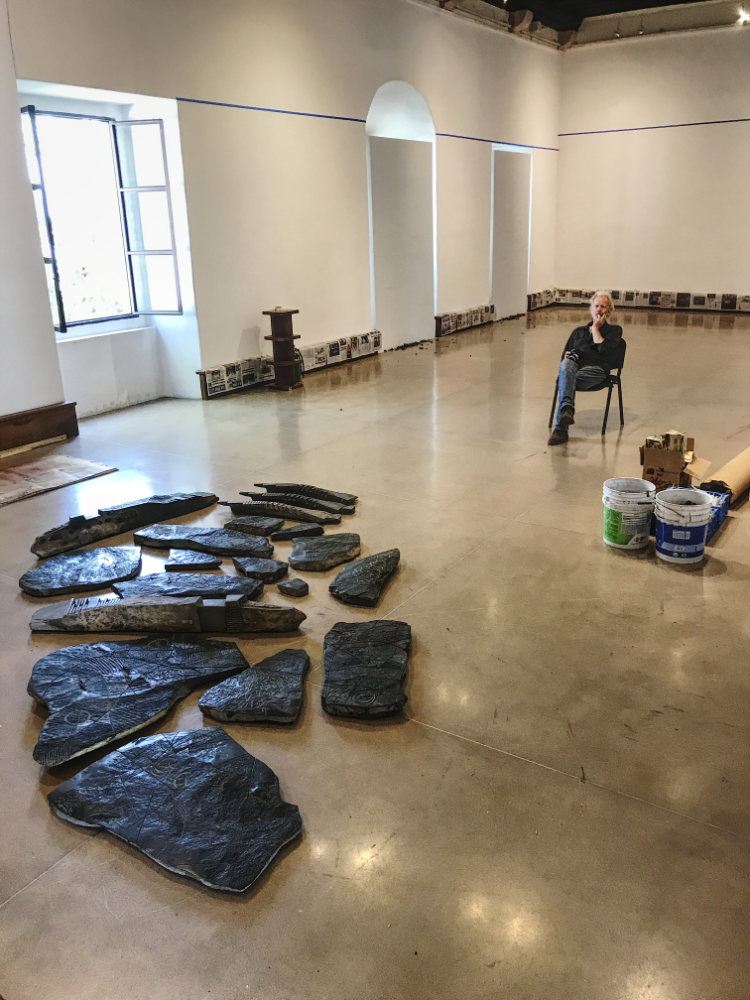
By bringing together projects and experiences in this exhibition, we aim to establish parallels and resonances between six artists of different backgrounds and temperaments. These are elementary works because they resort to different degrees of experimentation with simple and uncomplicated media: paper, ink, ceramics, wood and stone. By opposing, completing and unfolding we refer to the personal and particular process that each artist has undergone to compose each set of work, each installation, each object and image. These installations manifest hybridizations between the human and the vegetal, explorations of the forest and identity, imprints of the arboreal and the artist’s body, graphic impressions of stone matrices and the territory, ceramic narratives and animal dramaturgies.
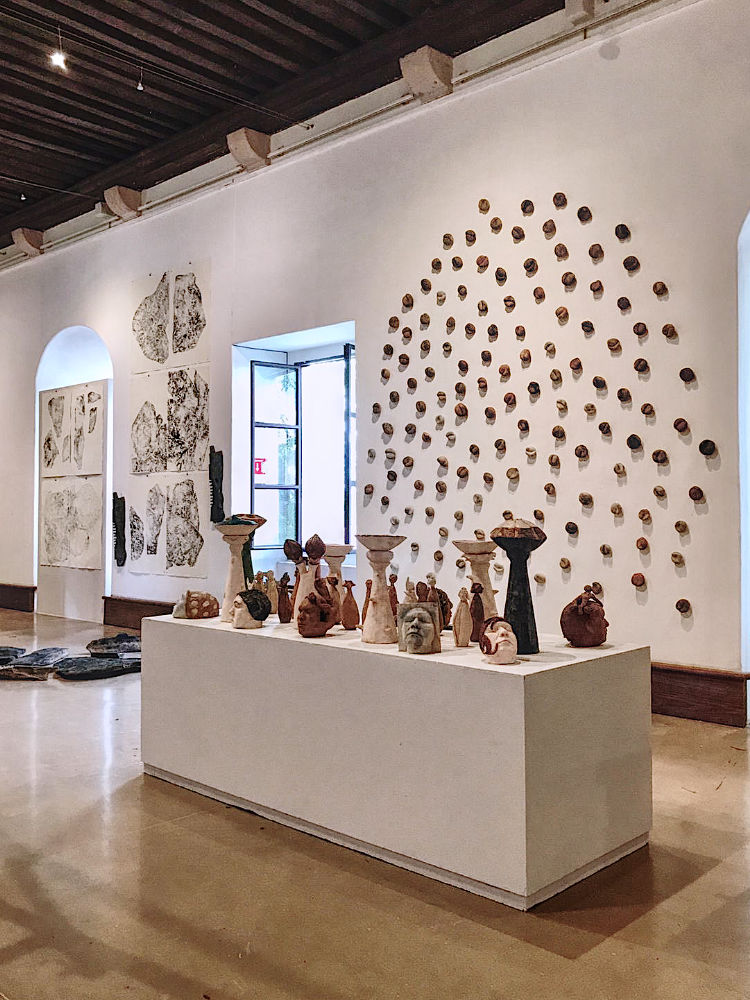
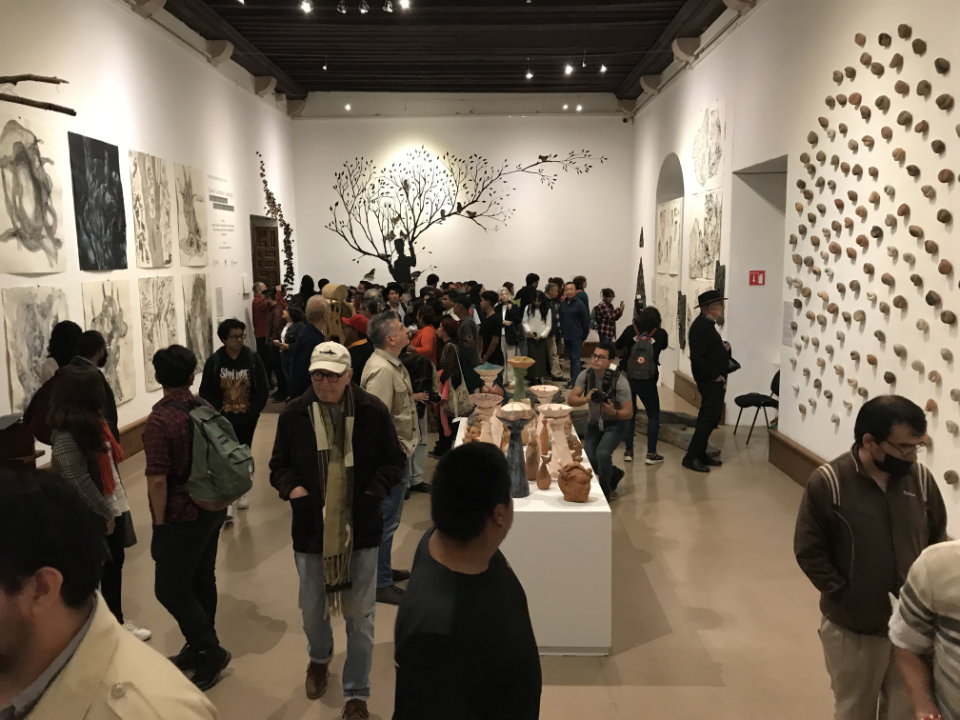
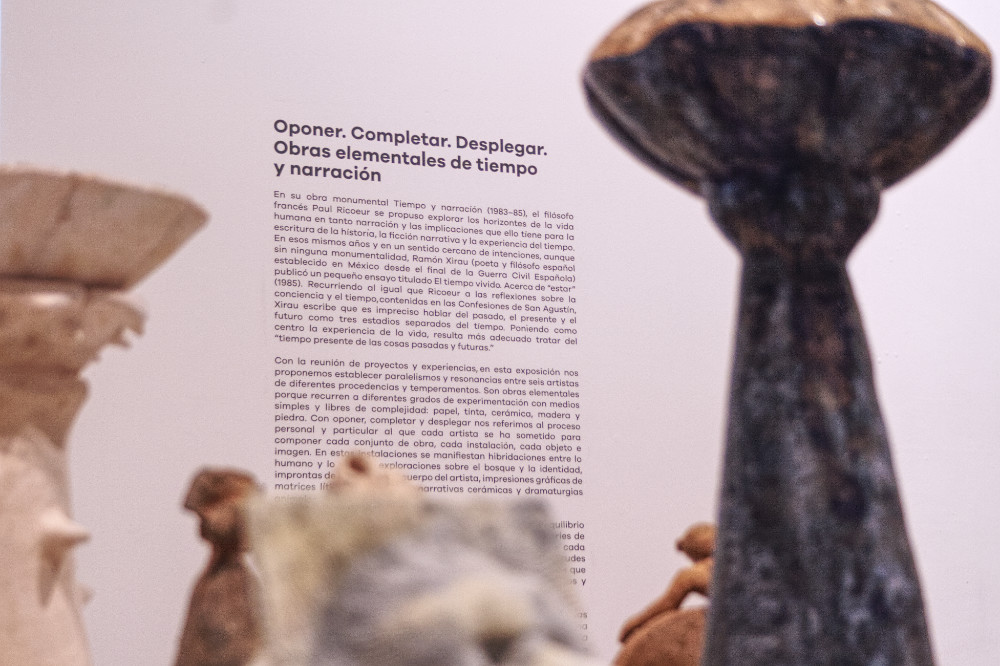
Here there is an individual and aesthetic consideration that seeks a balance between the work produced expressly for the exhibition and the long-term series, the thematic and material explorations that each artist has carried out spontaneously, motivated by concerns other than the present exercise of exhibiting (and exhibiting themselves). These are works that manifest a rich inner life, poured into continuous trials and errors, wrapped in makings, erasures and reconstructions.
The experience of time lived, territory, memory and new ideas are motors that activate artistic production, in a specific vital coordinate that operates within these projects: the narrative will of the present about everything that has happened and what we seek in the future.
Artistas | Artists
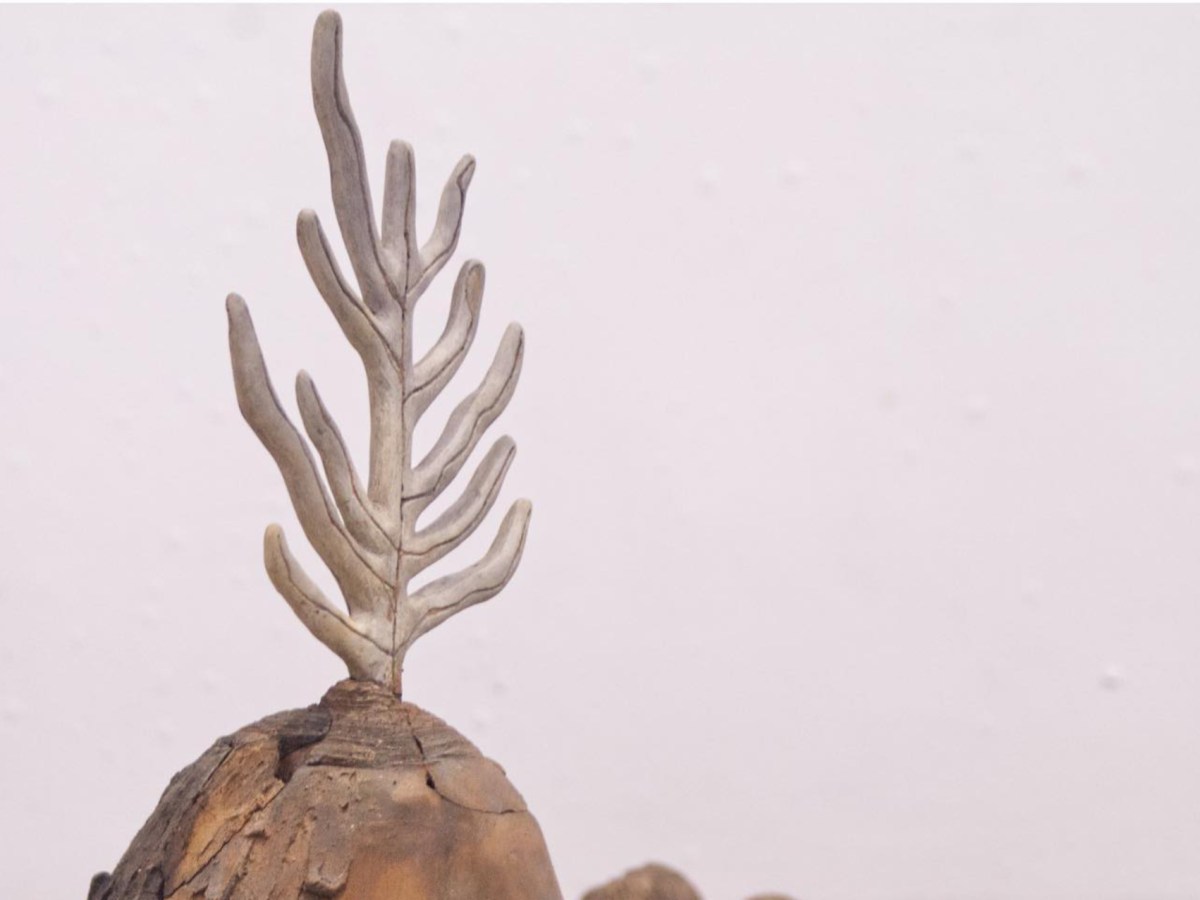
Rose Honor | Cerámica narrativa
Esta instalación se compone de cerámicas narrativas que condensan las búsquedas creativas de Rose en el diálogo con distintos barros y sus experiencias en la dirección de arte para producciones cinematográficas. En aquellas, si bien el resultado final es una imagen en movimiento, se requiere de ciertas quietudes y constancias sobre las cuales una narrativa…
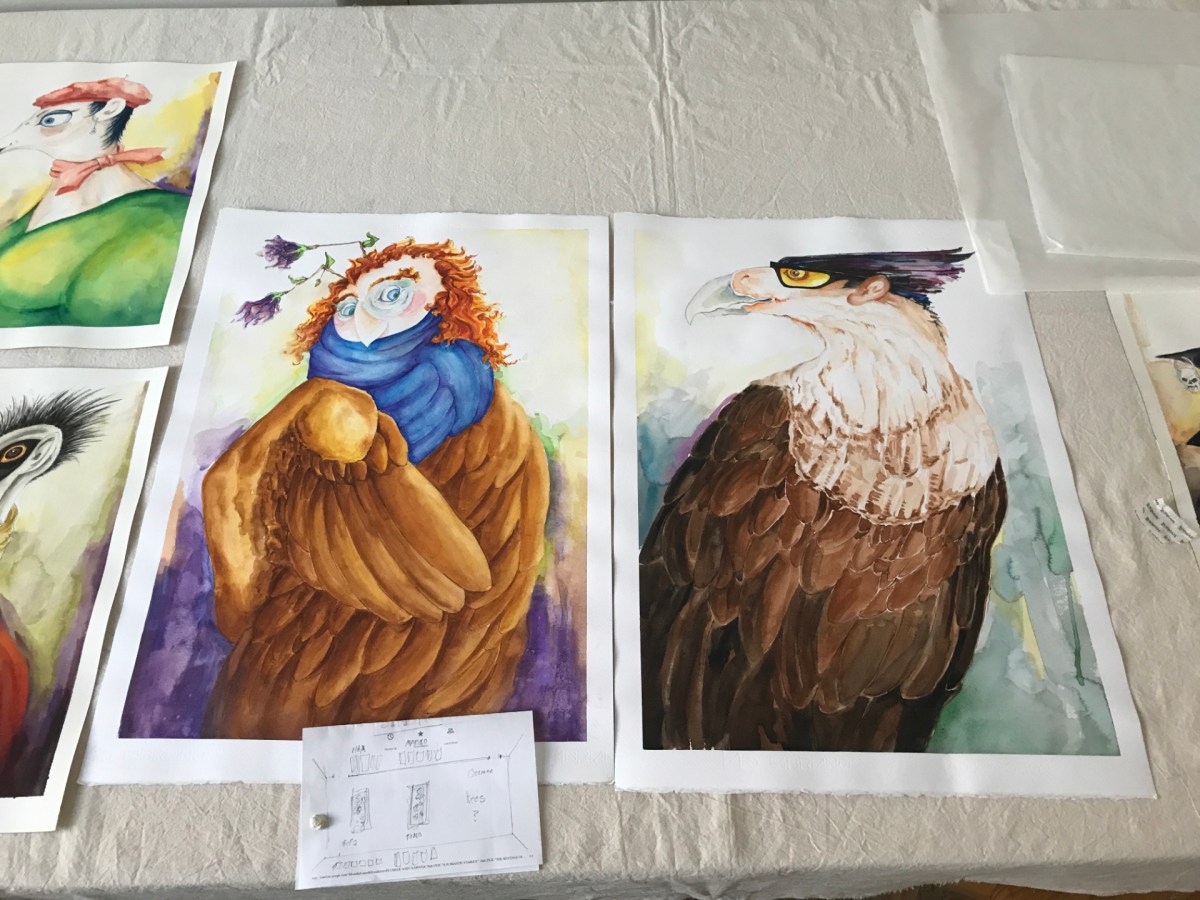
Max Nissenholtz | Plumajes de drama y comedia
Nissenholtz explora dos polos narrativos –la Comedia Romántica y el Drama– con referencias que no son exclusivamente literarias sino también cinematográficas y televisivas. Crea viñetas de una dramaturgia a dos vías que son objeto materia del consumo masivo sobre historias de enredos amorosos y ficciones de corte histórico e ideológico.
Florentino Ibarra | Por una flora humana
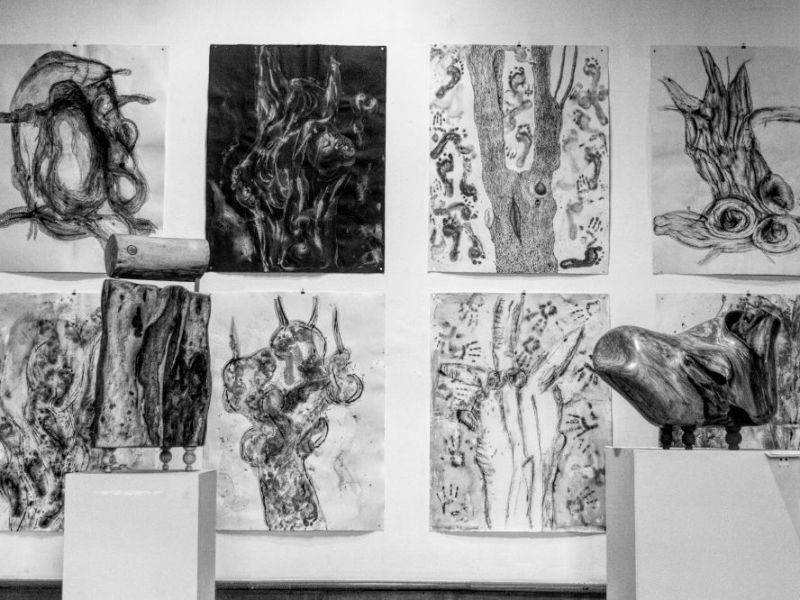
Puede que las narrativas sacrificiales no pervivan más, pero en la diversidad cultural de pueblos y comunidades de México continúa esta asociación corporal con los procesos agrícolas. En la obra de Florentino Ibarra persisten las referencias a su pueblo y región de origen –Tierra Caliente– así como una visión, a la vez individual y colectiva,…
Marco A. López Prado | Sin figuración, pura presencia
En la obra de Marco Antonio López Prado persiste una longeva relación entre cuerpo, paisaje y culturas de labranza. Ha explorado en la pintura, la gráfica y la escultura diferentes expresiones del cuerpo humano, su carácter simbólico y evocativo, en un lenguaje figurativo no exento de fabulaciones e imágenes oníricas y eróticas.
Kees Ouwens | Todos los tiempos reunidos aquí
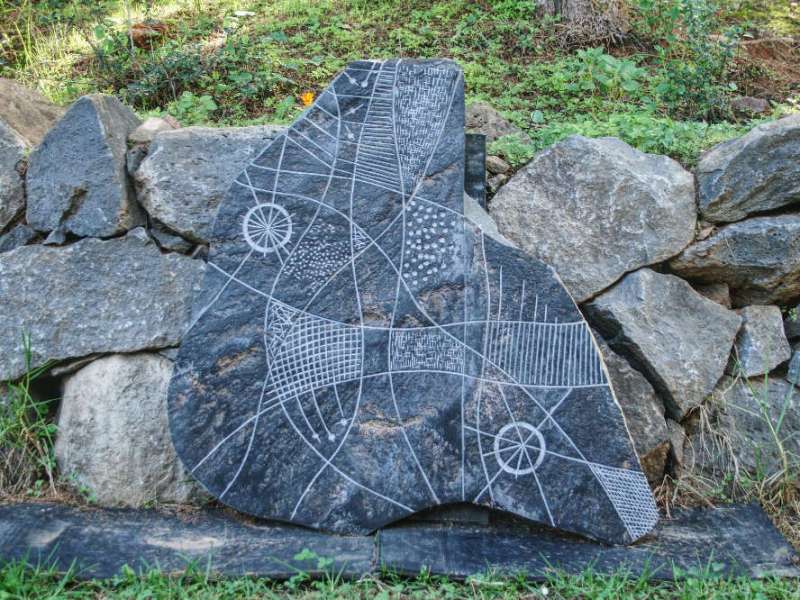
Ouwens hace evidentes los trazos y símbolos de estos petrograbados que guardan semejanza a los muchos que aún se encuentran dispersos en nuestro territorio. El código visual y táctil sugiere caminos, lugares, astros y cuadrantes. Cada piedra tiene su procedencia y contiene mensajes misteriosos que a su vez son experiencias. Todos esos tiempos están reunidos…
Carmen Jacobo | Mujer recolectora: la primera botánica
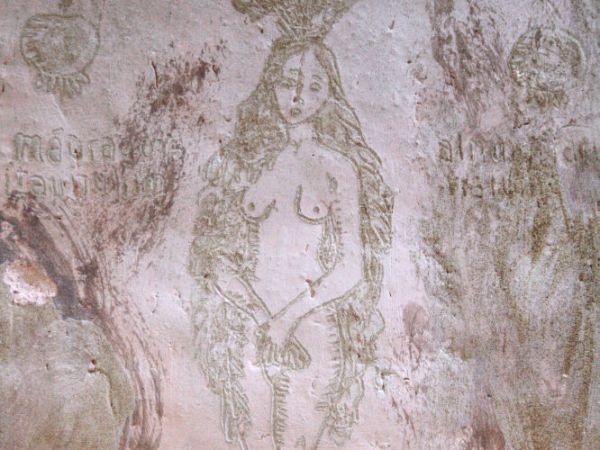
Carmen, como muchas otras mujeres, es: hija, centro, lluvia, observación, gato, horizonte y aquí. Cada objeto cerámico que tiene una inscripción afirmativa de la propia existencia establece un vínculo con el mundo a través de metáforas, las que permiten a Carmen relacionarse íntimamente con los espacios, los seres y su tiempo.
 banco d e n i e b l a